by Chiara De Angelis | Jun 8, 2018
 Image Source: www.comune.torino.it
| Country |
Italy |
| City |
Turin |
| Name |
Co-City Torino |
| Date |
1990’s |
| Description of the project |
The city of Turin has a long-lasting experience in the field of urban regeneration and in the last 15 years, it has been working to implement a set of tools in order to manage the city’s transformation. Turin’s awareness was stimulated by the need to deal with numerous abandoned industrial buildings, which called for a re-thinking of the city’s identity, and a security crisis in different central neighborhoods. These two elements, together with the availability of resources thanks to the Organization of the Olympic games in 2006, led to broad investments in urban regeneration and in projects aiming at reinforcing the city’s social structure.
More recent developments saw the adoption in January 2016 of the “Regulation on collaboration between citizens and the Administration for the care, shared management and regeneration of the urban commons” (inspired by the Bologna Regulation), an instrument allowing for a deeper involvement of all urban actors (citizens and civil society but also private actors and knowledge institutions) in the care and regeneration of urban commons.
Additionally, the city has recently been included between the 18 winners of the first UIA (Urban innovative Action) competition, which resulted in a 4.1 million financing from the EU Commission to the CO-City project, proposed by the City administration in collaboration with Turin’s University, ANCI and the Foundation Cascina Roccafranca. The project takes as its starting point the Regulation on the commons, and adopts the collaboration pacts as an instrument to foster collaboration between citizens and local administration. The project addresses the challenge of regenerating the most deprived city’s neighborhood and fighting social exclusion. It aims at transforming abandoned buildings and vacant land into hubs of residents’ participation, in order to foster community spirit and to create social enterprises, reducing in this way unemployment and urban poverty. The commons will be entrusted to the care and management of citizens through forms of active participation, supported by the Case di Quartiere (Neighborhood Houses) network. The project will adopt digital instruments such as First Life, a platform developed by the University with the aim of facilitating citizens’ involvement and mapping community projects. |
| Urban Co-Governance |
Strong |
| Enabling State |
Moderate |
| Pooling |
Strong |
| Experimentalism |
Moderate |
| Tech Justice |
Strong |
| Project Website |
http://www.comune.torino.it/rigenerazioneurbana/en/
http://www.comune.torino.it/benicomuni/bm~doc/regolamento-beni-comuniurbani-n_375.pdf
http://www.comune.torino.it/benicomuni/co-city/index.shtml |
| References, sources, contact person(s) |
Co-City Torino, Italy.
Source: Urban Innovative Action http://www.uia-initiative.eu/fr/uia-cities/turin; Regolamento sulla collaborazione tra cittadini e amministrazione per la cura, la gestione condivida e la rigenerazione dei bei comuni urbani. http://www.comune.torino.it/benicomuni/bm~doc/regolamento-beni-comuniurbani-n_375.pdf
Contact : rigenerazioneurbana@comune.torino.it |
Torino
by Chiara De Angelis | Jun 8, 2018
 Image source . http://neighbor-space.org/
| Country |
United States |
| City |
Chicago |
| Name |
Neighborspace |
| Date |
2012 |
| Description |
NeighborSpace is the only nonprofit urban land trust in Chicago that preserves and sustains gardens on behalf of dedicated community groups. They shoulder the responsibilities of property ownership — such as providing basic insurance, access to water, and links to support networks — so that community groups can focus on gardening.
NeighborSpace’s mission is to preserve and support the development of community managed gardens and open spaces throughout the City of Chicago. This mission is accomplished by acquiring land on behalf of communities to protect community established and managed gardens from development, supporting the long-term success of these community efforts, and building awareness of how these urban “Edens” contribute to an improved quality of life for residents. |
| Urban Co-Governance |
Strong |
| Enabling State |
Strong |
| Pooling |
Strong |
| Experimentalism |
Strong |
| Tech Justice |
Weak |
| Website |
http://neighbor-space.org/ |
| References, sources, contact person(s) |
Website; articles. Contact : rcline@neighbor-space.org |
Chicago

by Chiara De Angelis | Jun 8, 2018
| Country |
Indonesia |
| City |
Jakarta |
| Name |
Nebengers |
| Date |
2012 |
| Description |
Andreas Aditya Swasti, 26, established a community on Twitter called Nebengers in December 2011, in order to allow commuters with vacant seats on or in their vehicles to offer rides to those people without cars or bikes who need to travel in the same direction.
Nebengers, derived from the Indonesian word “nebeng” meaning free ride, is what Andreas calls a ‘virtual terminal’. The aim was simple: to help the city reduce its traffic jams by having groups of people traveling together; thereby reduce the number of vehicles on the roads, and also giving people a chance to make new friends. Through their Twitter account @nebengers, people with vacant seats in their vehicles can offer free rides to people, while those looking for transportation to particular destinations can do the same. Nebengers have more than 2,200 registered members on their list, which is available at nebengers.com. |
| Urban Co-Governance |
Moderate |
| Enabling State |
Moderate |
| Pooling |
Moderate |
| Experimentalism |
Weak |
| Tech Justice |
Moderate |
| Website |
www.nebengers.com |
| References, sources, contact person(s) |
Website; articles
Contact : halo@nebengers.com |
jakarta
by Chiara De Angelis | Jun 8, 2018
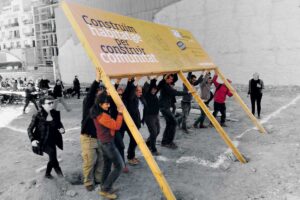 Image sources : https://www.syndikat.org/en/
| Country |
Germany |
| City |
Berlin |
| Name |
The Mietshäuser Syndikat (apartment-house syndicate) |
| Date |
1980s-90s |
| Description |
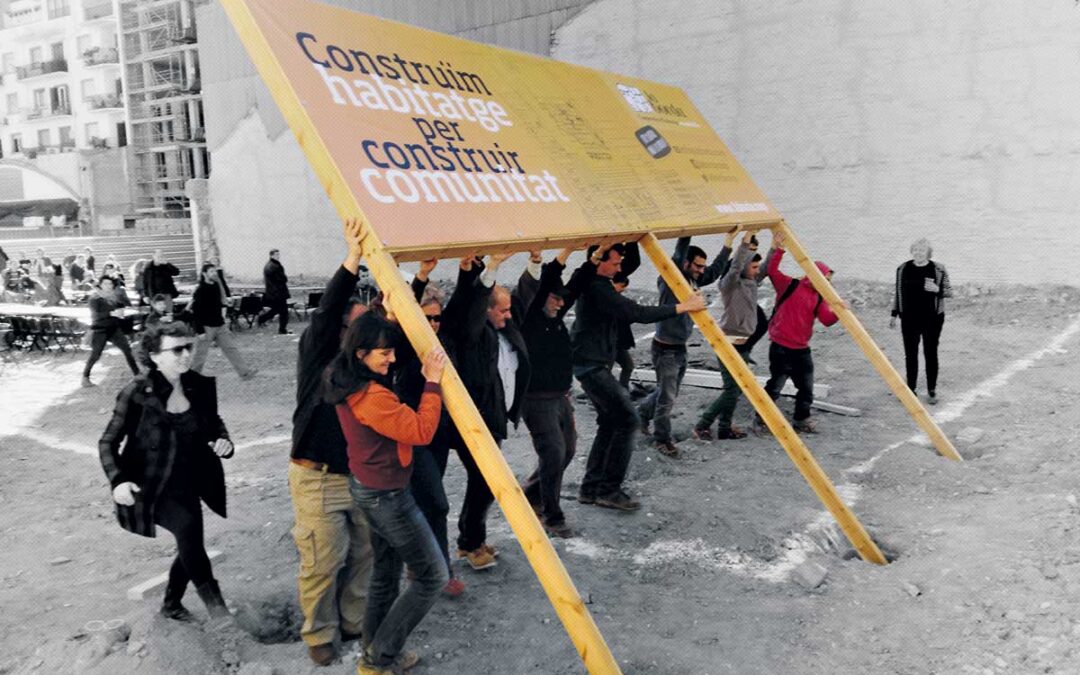
The goal of the Mietshäuser Syndikat, expressed in its 1992 statute, is ‘to support the genesis and achieve political acceptance of self-organized house projects – humane living space and a roof over the head, for everybody.’
The Mietshäuser Syndikat provides advice and support to self-organized house projects, so that they can be taken off the real estate market. With its know-how in the area of project financing it helps groups of residents interested in
living together in a self-organized and managed environment. Over the years the Syndakat has built a solid network, now composed of 119 house projects and 20 project initiatives. All these projects are autonomous and developed in different moments, but as they are part of a solidarity network, created and managed by the Syndakat, they work together and support each other.
All projects are self-organized, the Syndakat has a financial interest in every house-LLC to prevent sellouts (the financing and property system adopted is explained here), and all projects have committed themselves to making contributions to the joint solidarity fund. Therefore, older and more financially stable projects will support new projects by advertising them and participating in their financing. |
| Urban Co-Governance |
Moderate |
| Enabling State |
Moderate |
| Pooling |
Moderate |
| Experimentalism |
Strong |
| Tech Justice |
N/A |
| Website |
https://www.syndikat.org/en/ |
| References, sources, contact person(s) |
website : https://www.syndikat.org/en/
Contact : info@syndikat.org |
Berlin

by Lucia Errandonea | Jun 8, 2018
 Source: Twitter Page https://twitter.com/linqlab
| Country |
Ecuador |
| City |
Quito |
| Name |
Innovation Laboratory Quito (LINQ) |
| Date |
2015 |
| Description |
LINQ is a space for dialogue and direct collaboration between citizens, local and international organizations, universities and the public and private sector; Which aims to co-create and implement high-impact solutions to the city’s challenges.
The LINQ is an accelerator of innovation, it is an open door between the Municipality and the citizenship that works under a participatory, collaborative and transparent framework.
Its mission is to foster a culture of innovation and co-creation, facilitating the participation of multidisciplinary actors that contribute to research, methodologies and solutions that benefit citizens in key issues oriented mainly to social, urban and mobility development.
LINQ is an initiative of the General Secretariat of Planning of the Municipality of Quito as part of the Open Government policy of the current administration.
Open Government is a responsible government policy that promotes the construction of a smart city for people. |
| Urban Co-Governance |
Moderate |
| Enabling State |
Strong |
| Pooling |
Strong |
| Experimentalism |
Strong |
| Tech Justice |
Moderate |
| Project Website |
http://linq.quito.gob.ec/que-es-linq/#sthash.ma0wPIQc.dpbs |
| References, sources, contact person(s) |
Innovation Laboratory Quito (LINQ), Ecuador. Source: Webpage
Facebook page : https://www.facebook.com/linqlab
https://govlabacademy.org/projects/linq.html
http://linq.quito.gob.ec/que-es-linq/#sthash.Wdu40tek.dpuf
http://mi.quito.gob.ec/que-proyecto-de-territorio-colaborativo-propones-para-el-evento-quito-comparte |
Centro de Arte Contemporáneo de Quito
