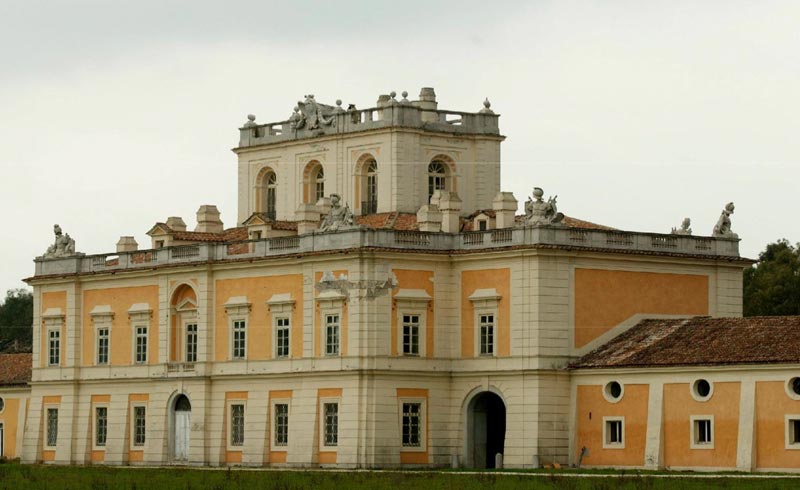
by Chiara De Angelis | Jun 8, 2018
Image credit : https://www.beniculturali.it/luogo/real-sito-di-carditello
| Country |
Italy |
| City |
San Tammaro |
| Name |
Reggia di Carditello |
| Date |
2016 |
| Description of the project |
The Real Sito di Carditello Foundation was established in 2016 by the Ministry of Cultural Heritage and Activities and Tourism, the Campania Region, and the city of San Tammaro. The foundation was created as a non for profit institution with the aim of encouraging the knowledge, protection, recovery, and promotion of the Real Sito di Carditello complex.
On top of promoting the area as a touristic itinerary, the foundation attempts at opening the spaces of the Real Sito di Carditello for the community. |
| Urban Co-Governance |
Strong |
| Enabling State |
Moderate |
| Pooling |
Moderate |
| Experimentalism |
Strong |
| Tech Justice |
Weak |
| Project Websites |
Foundation’s website : https://www.fondazionecarditello.org/website/visita/
Ministero della cultura : https://www.beniculturali.it/luogo/real-sito-di-carditello |
| References, sources, contact person(s) |
Websites – MiBACT ; Interview.
Contact : segreteria@fondazionecarditello.org and fondazionecarditello@legalmail.it |
Caserta

by Cosima Malandrino | Jun 8, 2018
 Source: Viladecans, http://www.viladecans.cat/es
| Country |
Spain |
| City |
Villadecans |
| Name |
VILAWATT -Innovative Local Public-Private-Citizen Partnership for Energy Governance |
| Date |
2016 |
| Description |
The main challenge is to achieve a low carbon, socially just, healthier and happier community, where citizens play an active role in that change in order to secure a stable Energy Transition Process in Viladecans City.
From all the challenges that a community must face in an energy transition process, VILAWATT will, as a priority, focus on unlocking the needed deep energy renovation of residential buildings. The proposal aims at addressing this situation firstly in low income communities where higher efforts need to be done (In Spain about 17% homes are suffering from fuel poverty).
This project will initiate the transition by focusing on Montserratina District (45 Ha.) with its 20.216 residents (30% of the whole City), 8.026 dwellings (6.203 of which are built before 1976, i.e. before any energy related legislation was in place). The annual district income is 15% lower compared to the City average, and its annual final energy consumption is 34 GWh; 75 kWh/year m2.
On a social, economic and environmental level this project works to:
- Awake the community on the energy efficiency and management, and will empower the citizens by making them transit from a passive to a proactive role.
- Strengthen the local economy by bringing economic empowerment to the community vulnerable groups and by creating new jobs linked to the energy transition.
- Reduce environmental impacts (GHG, air pollution and other) thanks to energy efficiency measures and the switching from fossil fuels to renewable energy. VILAWATT pretends to reduce these impacts gradually and in a stable way, instead of having an occasionally benefit.
The Energy Transition will be initiated by the creation of an Innovative Public-Private-Citizen Governance Partnership at Local level (PPCP). This new PPCP will be the central hub that will manage the new local tools for the transition: energy supply, energy currency, energy savings services, deep energy renovation investments and renewable energy production.
This entity will have, for the first time, the Municipality together with the local businesses and the citizens of Viladecans as its members. Its mission will be to promote and ensure a secure, clean and efficient use of energy. |
| Urban Co-Governance |
Moderate |
| Enabling State |
Strong |
| Pooling |
Strong |
| Experimentalism |
Strong |
| Tech Justice |
Moderate |
| Website |
https://www.viladecans.cat/en/vilawatt |
| References, sources, contact person(s) |
VILAWATT -Innovative Local Public-Private-Citizen Partnership for Energy Governance, Villadecans, Spain. Source: website, and http://www.uia-initiative.eu/en/uia-cities/viladecans
Contact :
Marina JARQUE
Corporate Communications and International Relations Director
|
Viladecans, Spain

by Chiara De Angelis | Jun 8, 2018
Credits: of Fujisawa SST from http://news.panasonic.com/global/topics/2011/5407.html
| City |
Fujisawa |
| Country |
Japan |
| Name |
Fujisawa Sustainable Smart Town |
| Date |
2014 |
| Description |
The Fujisawa Sustainable Smart Town (Fujisawa SST) is being developed in Fujisawa City, Kanagawa Prefecture as a joint project between the private and public sectors, which involves, partner companies promoting advanced initiatives, and Fujisawa City itself.
The main feature of this project is that it has built an actual smart town with 1,000 households.
The aim is not simply to develop a town underpinned by advanced technology-based infrastructure, but a town based on actual lifestyles.
Central to the project is the establishment of guidelines for town and community designs. Residents sharing the objectives of the town live, interact and exchange ideas for achieving better lifestyles. The town management company took resident views into consideration, incorporated new services and technologies, and continuously supported the sustainable evolution of the town. Actual lifestyle-based innovative systems will continue to bring energy in every aspect of people’s lives in terms of energy, security, mobility, wellness, community and also in emergencies. Therefore, instead of focusing on infrastructure first, like it is usual in town development projects, Fujisawa SST took as its primary consideration the creation of a concept for a smart community lifestyle based on residential comfort, regional characteristics, and future living patterns. The main features of sustainability in the town plan are public parks, forests, gardens, public squares, community centers, a variety of services and commerces, eco-friendly mobility, and the inclusion of green energy. |
| Urban Co-Governance |
Weak |
| Enabling State |
Weak |
| Pooling |
Weak |
| Experimentalism |
Moderate |
| Tech Justice |
Moderate |
| Project Website |
http://fujisawasst.com/EN/ |
| References, sources, contact person(s) |
Website ,
|
fujisawa

by Chiara De Angelis | Jun 8, 2018
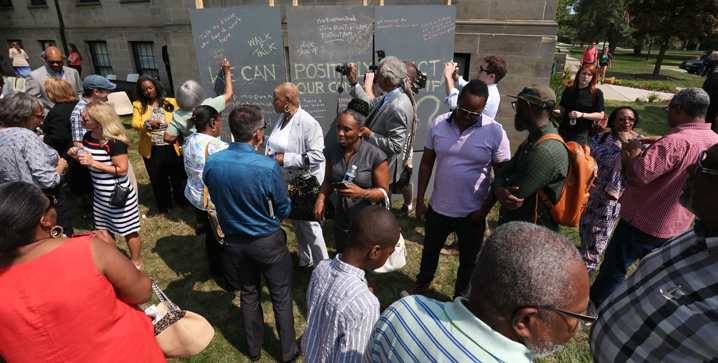
 Credits: Picture by http://www.live6detroit.org/#storiesintro
| Country |
United State |
| City |
Detroit |
| Name |
Live 6 Alliance |
| Date |
2015 |
| Description |
Live6 Alliance is a nonprofit planning and development organization whose mission is to enhance quality of life and economic opportunity in Northwest Detroit. It was formed in 2015 through a partnership of community, philanthropic and city stakeholders led by the University of Detroit Mercy.
Live6 Alliance strives for authentic, inclusive neighborhood revitalization with a particular focus on the Livernois and McNichols corridors. The organization serves a central convener and coordinator between the community, institutions, and key stakeholders who contribute to positive change in the community.
The organization actively serves the community in the following six program areas:
- Real estate development
- Business attraction & retention
- Placemaking
- Residential stabilization
- Safety
- Engagement
|
| Urban Co-Governance |
Strong |
| Enabling State |
Strong |
| Pooling |
Strong |
| Experimentalism |
Strong |
| Tech Justice |
– |
| Website |
http://www.live6detroit.org/#intro |
| References, sources, contact person(s) |
Interview with Lauren Hood, Website
Live6 Facebook Page: here.
“New Live6 Alliance Executive Director and Commercial Corridor Manager named,” Detroit Mercy, February 8, 2018, available here.
“With democratic budgeting, Live6 takes a nontraditional approach to community engagement,” Model D, “Features,” December 17, 20717, available here.
“New Live6 Alliance headquarters and its homegrown director bring energy to neighborhood,” Model D, “Features,” October 10, 2016, available here.
“New effort to spruce up Livernois and McNichols area,” Detroit Free Press, August 31, 2015, available here.
Contact : info@live6detroit.org |
detroit
7426 W. McNichols
Detroit, MI 48221

by Cosima Malandrino | Jun 8, 2018
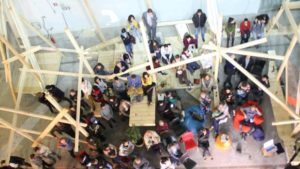 Image Source: Labsus http://www.labsus.org/2016/12/civicwise-
urbanistica-collaborativa-intelligenza-connettiva-e-azione-locale-2/
| Country |
Spain |
| City |
Valencia |
| Name |
Civic Factory |
| Date |
2016 |
| Description |
The Civic Factory is an ecosystem of synergies capable of promoting collaborative and collective construction dynamics among the actors of the city,: citizenship, public administration, university and the private sector. An accelerator for initiatives and collective projects capable of transforming the territory.
It was created by the CivicWise Valencia circle belonging to the international network CivicWise and focused on projects of Collective Intelligence, Civic Innovation and Open Design. The Civic Factory proposes a new format for intermediation and promotion of activities, projects, actions and practices of Civic Economy, regardless of discipline, experience, race or condition.
The first phase to be able to prototype this project has been the Civic Factory Fest: a month-long event in which public, private and collective entities from Valencia and other cities in Spain and the rest of Europe have taken a first step towards its collective construction. The scenario and the opportunity to materialize the project was born from the collaboration between CivicWise and the public consortium of La Marina Real of Valencia in which it was designed the reactivation of the area destined to the hangars of the Alinghi building. From this first prototyping, it was established a community of people willing to go ahead with the project. |
| Urban Co-Governance |
Moderate |
| Enabling State |
Moderate |
| Pooling |
Moderate |
| Experimentalism |
Moderate |
| Tech Justice |
Weak |
| Website |
Factoría Cívica Valencia (civicwise.org) : https://factoriacivicavalencia.civicwise.org/ |
| References, sources, contact person(s) |
Civic Factory, Valencia Spain. Source: Institutional website; Demo Comunes.net http://democomunes.net/civic-factory-fest-espacio-para-la-construccion-colectiva-de-la-ciudad/
Contact : valencia@factoriacivica.com |
Valencia, Spain
