
by Francesca Spigarolo | Jun 8, 2018

Image source : https://www.walthamforest.gov.uk/
| Country |
United Kingdom |
| City |
London |
| Name |
Waltham Forest |
| Date |
2016 |
| Description |
Waltham Forest is a borough located in the North-East area of London.
A Toolkit for the Waltham Forest Council was created by Kaizen (an award-winning social business that specializes in designing and delivering projects in the community sector) and Social Life (established in 2012 by The Young Foundation, it works on the relationship between people and places). The aim of the Toolkit is to help officers, councilors, residents and other agencies become more confident in how to engage residents. Waltham Forest Council has ambitious plans for growth, and wants these to benefit all of the borough’s residents.
They want to: 1) improve the way we engage residents in planning and delivering new developments 2) build an understanding of the range of different engagement methods that can be used 3) understand what works in different parts of the borough and for different types of project.
The toolkit uses the experience of testing different engagement methods in four pilot areas: Blackhorse Lane, Highams Park, Lea Bridge Road and Priory Court Estate in spring 2016. It also includes other examples of engagement in the borough, and links to a range of engagement materials produced by other organizations. |
| Urban Co-Governance |
Moderate |
| Enabling State |
Moderate |
| Pooling |
Moderate |
| Experimentalism |
Strong |
| Tech Justice |
Moderate |
| Website |
https://www.walthamforest.gov.uk/
http://www.facebook.com/home.php |
| References, sources, contact person(s) |
Website
Contact : Local Plans Officer Kelvin.Bathie@walthamforest.gov.uk |
waltham forest london

by Francesca Spigarolo | Jun 8, 2018
 Image source : http://www.londonclt.org/where/
| Country |
United Kingdom |
| City |
London |
| Name |
London Community Land Trust |
| Date |
2007 |
| Description |
London CLT aims at providing permanently affordable homes, addressing in this way the growing gap in the housing market between people who qualify for social housing and those who can afford to buy a home on the open market.
London CLT was born as the East London CLT in 2007, set up by London Citizens. It was the result of a long-lasting grassroots campaign led by Citizens UK, with its roots lying in the 2004 bid for the Olympic Games. In 2015, local community groups in Lewisham, Croydon and Southwark asked to work on the construction of CLT’s in other areas.
London CLT is an independent organization, governed by its own members according to the principles of community organizing. Anyone who lives or works in the area can buy a share for £1 and become a member. Each year, the members chose the components of the Board through an election process.
Apartment’s prices are set according to local wages, based on the idea that a person should not spend on housing more than 1/3rd of his salary. Houses are allocated by an independent panel.
The first CLT to be created is the St. Clement’s CLT. |
| Urban Co-Governance |
Moderate |
| Enabling State |
Moderate |
| Pooling |
Moderate |
| Experimentalism |
Moderate |
| Tech Justice |
Weak |
| Website |
http://www.londonclt.org/where/ |
| References, sources, contact person(s) |
Interviews, Websites http://www.londonclt.org/where/
https://www.ethex.org.uk/london-community-land-trust—what-they-do_1193.html
https://www.theguardian.com/society/2014/jun/25/community-land-trusts-uk-housing-crisis-east-london-mile-end
https://www.theguardian.com/cities/2017/jan/16/radical-model-housing-crisis-property-prices-income-community-land-trustsContact : info@londonclt.org
|
112 CAVELL STREET WHITECHAPEL LONDON E1 2JA
by Chiara De Angelis | Jun 8, 2018
 Image sources : https://www.medialab-matadero.es/en/laboratories/participalab
| Country |
Spain |
| City |
Madrid |
| Name |
Participalab – Medialab Prado |
| Date |
|
| Description of the project |
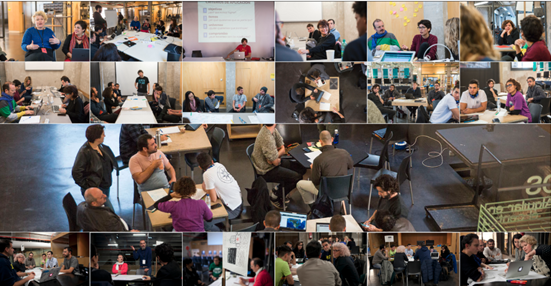
Collective Intelligence for Participatory Democracy Lab // ParticipaLab is a working hub to develop collaborative projects around hybrid democratic participation. A space to design new participation technologies to focus a new deliberative and direct democracy combining digital and face to face processes.
This lab is aimed at the study, development and practical application of participation processes that can foster direct, deliberative and distributed democracy. To this end, we analyse participation processes that combine physical and digital spaces, focusing our work on the impact of these processes and the degree to which citizens are taking ownership of these tools.
The internet offers infinite possibilities for peer interaction that have yet to be explored. Developing these possibilities will pave the way to a society that’s increasingly involved in political action via new processes based on inclusiveness and representativeness. |
| Urban Co-Governance |
Moderate |
| Enabling State |
Moderate |
| Pooling |
Weak |
| Experimentalism |
Moderate |
| Tech Justice |
Strong |
| Project Website |
ParticipaLab | Medialab-Matadero Madrid |
| References, sources, contact person(s) |
Interview, website
Contact : info.m@medialab-prado.es |
Madrid

by Francesca Spigarolo | Jun 8, 2018
Image source : http://www.granby4streetsclt.co.uk/history-of-the-four-streets/
| Country |
United Kingdom |
| City |
Liverpool |
| Name |
Granby Four Street |
| Date |
2010 |
| Description |
Since the 80s the area of Granby Street, once a lively high street at the centre of Liverpool’s most racially and ethnically diverse community, has been in a state of neglect, with many shops closing, building being abandoned and residents facing higher unemployment and lack of services.
The residents established the Granby Residents Association in 1993, with the aim of preventing the demolition of the remaining Victorian houses, and of rebuilding the community. Since 2010, when the demolition project was stopped, resident groups began to work to transform the neighborhood in a better place where to live. Over two decades they cleared, planted, painted, and campaigned in order to reclaim their streets.
In 2011 they entered an innovative form of community land ownership, the Granby Four Streets Community Land Trust (CLT) with the intention of bringing empty homes back into use as affordable housing. The CLT worked together with the London-based collective Assemble (that already developed numerous regeneration and temporary re-use projects around the country) to present a new sustainable vision of the neighborhood, involving refurbishment of housing, public space and the provision of new work and enterprise opportunities. The group has been able to gain the City Council support and to involve housing associations in the projects. |
| Urban Co-Governance |
Strong |
| Enabling State |
Strong |
| Pooling |
Moderate |
| Experimentalism |
Moderate |
| Tech Justice |
Weak |
| Website |
http://www.granby4streetsclt.co.uk/history-of-the-four-streets/ |
| References, sources, contact person(s) |
websites
http://assemblestudio.co.uk/?page_id=862
http://assemblestudio.co.uk/?page_id=1030
https://www.theguardian.com/artanddesign/2014/nov/27/liverpool-locals-took-control-long-neglected-streets
Contact : granby4streetsclt@gmail.com |
granby street liverpool
by Francesca Spigarolo | Jun 8, 2018
© Geef om Jan Eef
| Country |
Netherlands |
| City |
Amsterdam |
| Name |
Ik geef om de Jan Eef |
| Date |
2010 |
| Description |
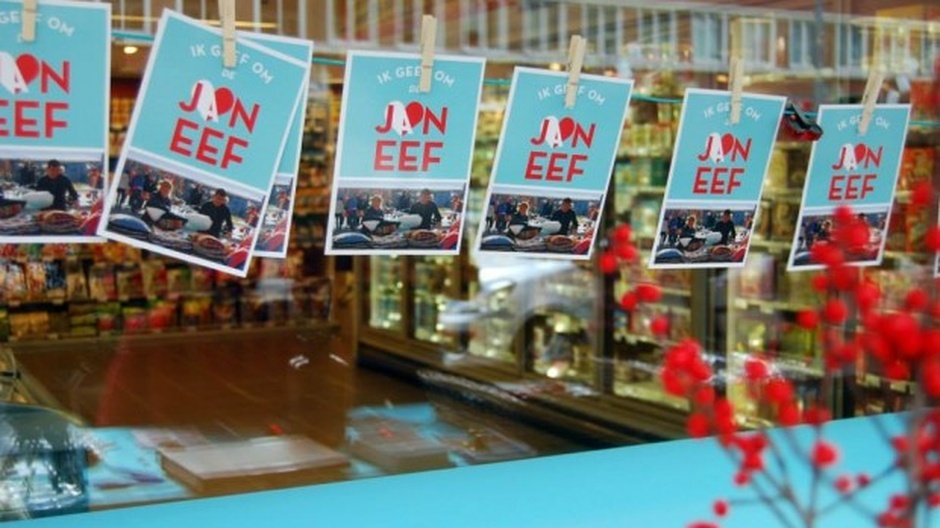
Ik geef om de Jan Eef (I care about Jan Eef) is a project through which local residents managed to regenerate a commercial street in a difficult neighborhood of Amsterdam. A group of residents and local entrepreneurs got together in an association and created a “Company Investment Zone” where shop owners join a fund in order to maintain the street themselves. The area is also, thanks to the support of the local administration, a free zone, where municipal rules for entrepreneurs and shop owners are less strict.
The association mediates between buildings owners and entrepreneurs in order to decrease the number of vacant buildings, and select projects which could bring an added value to the neighborhood. Through the Jan Eef project a local market has been created, and buildings are never empty, as many pop up shops and offices are put in place thanks to association’s coordination activity. |
| Urban Co-Governance |
Moderate |
| Enabling State |
Strong |
| Pooling |
Moderate |
| Experimentalism |
Strong |
| Tech Justice |
Moderate |
| Website |
http://www.geefomdejaneef.nl/over-jan-eef/jan-evertsen-buurtcooperatie/ |
| References, sources, contact person(s) |
Website ;
https://citiesintransition.eu/place/geef-om-jan-eef
Interview, Pakhuis De Zwijger
Contact : wsvjaneef@gmail.com |
jan eef
