
by Chiara De Angelis | Jun 8, 2018
 Image source : http://cphsolutionslab.dk
| Country |
Denmark |
| City |
Copenhagen |
| Name |
Copenhagen Solutions Lab |
| Date |
NA |
| Description |
Copenhagen Solutions Lab is the City of Copenhagen’s incubator for smart city initiatives. They work cross-sector with the City’s administration and in partnership with local and international companies and knowledge institutions to create and test new ideas, technologies and solutions to real urban challenges.
Copenhagen, like many other large cities, suffers from massive problems with congestion and flash floods; this and the ambitious climate targets are reasons for the need to rethink how the city’s solutions are structured in new sustainable ways. They contribute to the overall goal of Copenhagen being a green, safe, clean and liveable city and we explore the ways the utilization of big data, new technologies and a digital infrastructure can help achieving this goal.
The Copenhagen Solutions Lab wants to be a new governing body for smart city projects across all sectors in the city and will have focus on creating triple helix partnerships. Copenhagen Solutions Lab wants to lead the implementation of innovation and smart city development in close collaboration with knowledge institutions and companies as well as citizens. New ITS solutions, reduced carbon emissions, implementation of sensors that create real time data and information on current situations in the city and the build up and architecture of a new ‘Big Data Digital Infrastructure Platform’ that shares data across public and private sectors will all be working focus points within the Lab. |
| Urban Co-Governance |
Moderate |
| Enabling State |
Strong |
| Pooling |
Strong |
| Experimentalism |
Strong |
| Tech Justice |
Moderate |
| Website |
http://cphsolutionslab.dk |
| References, sources, contact person(s) |
Website
Contact : connect@cphsolutionslab.dk |
copenhagen

by Chiara De Angelis | Jun 8, 2018
 Image source : http://beta.calup.ro/en/the_project
| Country |
Romania |
| City |
Bucharest |
| Name |
Calup |
| Date |
2012 |
| Description |
The initiative emerged in 2012, from the need of an interdisciplinary group to find a common space for daily activities, cultural and collective events. In this search we discovered a significant number of unused spaces, absent from the map of city activities. To draw attention to their potential, we started CALUP for developing solutions to reuse vacant buildings, working with local challenges in the current economic context.
Projects like Dark Matters, Antumbra or Paralel Worlds are some of the initiatives that have relied on the potential reuse of existing structures. By promoting pop-up activities, we have reinstated unused historic buildings, highlighting their economic and cultural potential.
Discovering in vacant spaces a resource with significant potential for improving the quality of urban life, we started collecting information on their number, location and legal situation. In May 2015 calup.ro beta platform was launched, which allows collaborative listing of unused spaces in Bucharest in the form of an online database. Its purpose is to facilitate their reactivation through innovative projects and ideas, which highlight both their importance for local communities and their potential role in the sustainable development of the city. |
| Urban Co-Governance |
Moderate |
| Enabling State |
Moderate |
| Pooling |
Moderate |
| Experimentalism |
Strong |
| Tech Justice |
Strong |
| Website |
http://beta.calup.ro/en/the_project |
| References, sources, contact person(s) |
Beta website
Contact : contact@calup.ro |
brussels

by Chiara De Angelis | Jun 8, 2018
 Source : image at http://www.mejlgadelab.dk/about/ and logo at https://www.facebook.com/mejlgadelab/
| Country |
Denmark |
| City |
Aarhus |
| Name |
Mejlgade Lab |
| Date |
NA |
| Description |
Mejlgade Lab is an voluntary organization and urban laboratory, which aims to create local and sustainable solutions to global climate change and resource challenges. Their goal is to make urban life more green and sustainable and consequently more liveable.
Mejlgade Lab is based in the Latin Quarter, Aarhus – Denmark and in particular on the street of Mejlgade and acts to create local, community-based development, through a various of activities, green tests and pilot projects that support a sustainable transition in the specific areas. Their vIsIon is to inspire and engage locals in green networks and communities, where Mejlgade Lab functions as an intermediate green and sustainable 1:1 laboratory.
In order to facilitate a sustainable transition in the Latin Quarter we employ a user-driven methodology that engages citizens, municipality, local businesses. students and speciallsts among others in a series of cross-disciplinary projects, processes. workshops and events that inspire to concrete actions. A few of their current themes are waste management, intelligent rainwater solutions, biodiversity, green mobility and greening schemes, as well as others, in the densely populated city. |
| Urban Co-Governance |
Moderate |
| Enabling State |
Strong |
| Pooling |
Strong |
| Experimentalism |
Strong |
| Tech Justice |
Weak |
| Website |
http://www.mejlgadelab.dk/about/ |
| References, sources, contact person(s) |
Website, interview
Facebook page : https://www.facebook.com/mejlgadelab/
Contact : mail@mejlgadelab.dk |
aarhus

by Chiara De Angelis | Jun 8, 2018
| Country |
South Africa |
| City |
Cape Town |
| Name |
Cape Town Wireless User Group |
| Date |
2005 |
| Description of the project |
The Cape Town Wireless User Group started in 2005 as the brainchild of a group of friends in Cape Town, South Africa and it now reaches over 1500 community members. It is a community based not for profit wireless network in Cape Town, which aims at promoting the use and understanding of wireless equipment as well as providing an open wifi network for the whole city.
CTWUG is also a learning experience for every new user who learns by joining and setting up a node.
How does it work?
As the website explain, the CTWUG network works much like a small version of the internet. Many houses, buildings and high sites make up a mesh of interconnected nodes able to pass traffic along to the next, making it possible to connect all nodes on the network.
The website of the organization also helps its community members thanks to a chat and an online forum . |
| Urban Co-Governance |
Moderate |
| Enabling State |
Moderate |
| Pooling |
Moderate |
| Experimentalism |
Weak |
| Tech Justice |
Strong |
| Project Website |
https://ctwug.za.net/ |
| References, sources, contact person(s) |
Wikipedia page here.
Contact : committee@ctwug.za.net |
Cape town
by Chiara De Angelis | Jun 8, 2018
Credits: COPYRIGHT © 2015 HK FARM.
| Country |
China |
| City |
Hong Kong |
| Name |
HK Farm |
| Date |
2012 |
| Description |
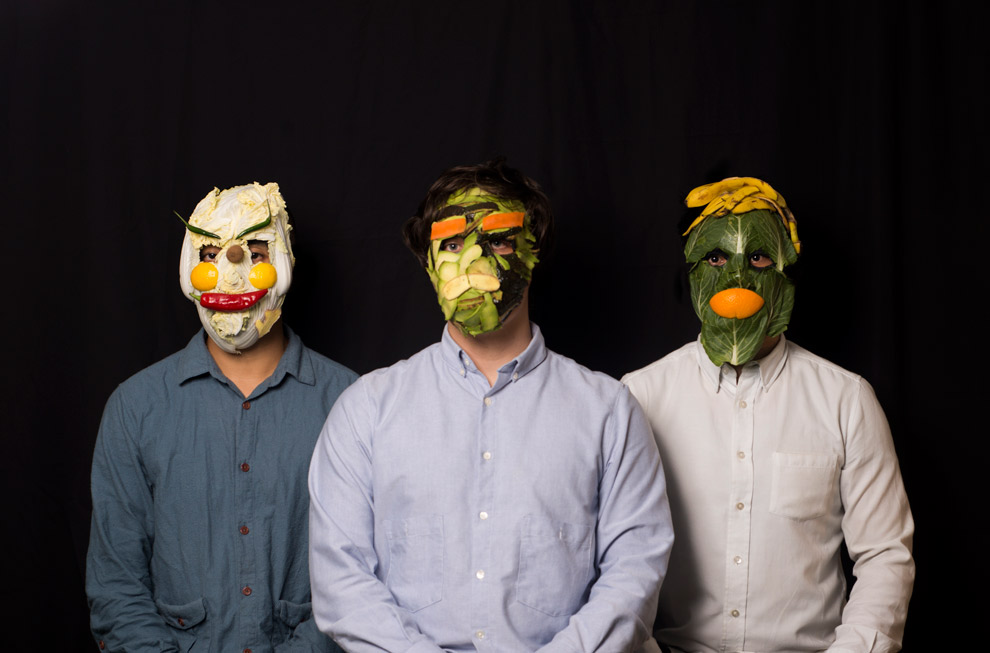
HK Farm grows local and organic food on Hong Kong rooftops. It was created by a designer, archivist and photographer in March 2012. These creative backgrounds have influenced an urban agricultura direction that is honest, unpredictable, tangible and self-sufficient. Their work is multidisciplinary, environmentally charged and contextual to Hong Kong’s urban environment. Similar to the crops grown on their rooftop and fertilized by resources found in the city, they work in a challenging environment, drawing their inspiration from the city and from the communities they work with |
| Urban Co-Governance |
Moderate |
| Enabling State |
Moderate |
| Pooling |
Moderate |
| Experimentalism |
Weak |
| Tech Justice |
Weak |
| Project Website |
http://www.hkfarm.org/community.html |
| References, sources, contact person(s) |
Institutional website
Contact :
|
hong kong
