
by Chiara De Angelis | Jun 8, 2018
Source: la Repubblica http://napoli.repubblica.it/cronaca/2016/01/02/news/il_comune_riconosce_l_ex_asilo_filangieri_tra_i_luoghi_della_cultura_di_napoli-130524954/
| Country |
Italy |
| City |
Naples |
| Name |
Recognizing the commons in Naples |
| Date |
2011 |
| Description |
The project begins in 2011, when the commons are included between the “purposes and fundamental values” of the Municipality’s Statute. Naples has been the first Italian city to devote an Administration’s department to the Common Goods. In 2012 the city’s Council established the “Laboratory for the Constituent on common goods” and in 2013 the Urban Permanent Observatory on the Commons was created.
The Administration has worked to individuate principles for “the identification and management of goods, unused or partly used, perceived by the community as “common goods” and subject to collective use” (expressed in Resolution n. 17, 18.01.2013), and has additionally focused on finding the principles for “the realization of actions directed to the inclusion of private good in the commons’ category. With this aim a Project Unit entitled “Identification and promotion of public and private spaces likely to be identified as the commons” has been created.
The identification of those principles allowed for the recognition (through a series of resolutions, with the last one being n. 466/2016) of seven public properties occupied by citizens and associations as “emerging commons and as civic developing environments”, and more spaces will be added to the list. The Administration recognized the value attributed to these spaces by the community, and decided to allow its citizens and social groups to directly manage them in a way that could “create social capital in terms of collective uses with a commons value”. One particularly interesting example is the Ex-Asilo Filangieri, the first good to be recognized as a commons. Already in 2012, the building was re-defined as “place with a complex use in the cultural field” (Resolution n. 11, 24/05/2012), with the aim of using its spaces to experiment with processes of participative democracy.
A narration of the Municipality’s path towards the creation of a new form of urban governance centered on the commons is available at this link (http://www.comune.napoli.it/flex/cm/pages/ServeBLOB.php/L/IT/IDPagina/16783), where all the official resolutions are also to be found. |
| Urban Co-Governance |
Moderate |
| Enabling State |
Strong |
| Pooling |
Strong |
| Experimentalism |
Weak |
| Tech Justice |
Weak |
| Website |
http://www.comune.napoli.it/flex/cm/pages/ServeBLOB.php/L/IT/IDPagina/16783 |
| References, sources, contact person(s) |
Recognizing the commons in Naples, Italy. Sources :
Comune di Napoli : http://www.comune.napoli.it/flex/cm/pages/ServeBLOB.php/L/IT/IDPagina/16783
European Alternatives : https://euroalter.com/2016/naples-common-good
L’Italia che cambia : http://www.italiachecambia.org/2016/08/napoli-immobili-comunali-occupati-diventano-beni-comuni/
Contact : fabio.pascape@comune.napoli.it |
Napoli

by Lucia Errandonea | Jun 8, 2018
Source: Rio On Watch, http://www.rioonwatch.org/?p=22310
Rio de Janeiro
by Chiara De Angelis | Jun 8, 2018
Image credit : http://participedia.net/en/cases/balochistan-agriculture-project-kitchen-gardening
| Country |
Pakistan |
| City |
Balochistan |
| Name |
Kitchen Gardening Initiative |
| Date |
NA |
| Description |
The Balochistan Agriculture Project is an initiative organized by USAID and UN’s Food and Agriculture Organization in Pakistan. The project’s primary aim is to help communities and individual farmers increase production, sales and revenues for crops and livestock. Another goal of the project is to inspire and facilitate the participation of women in income-earning activities.
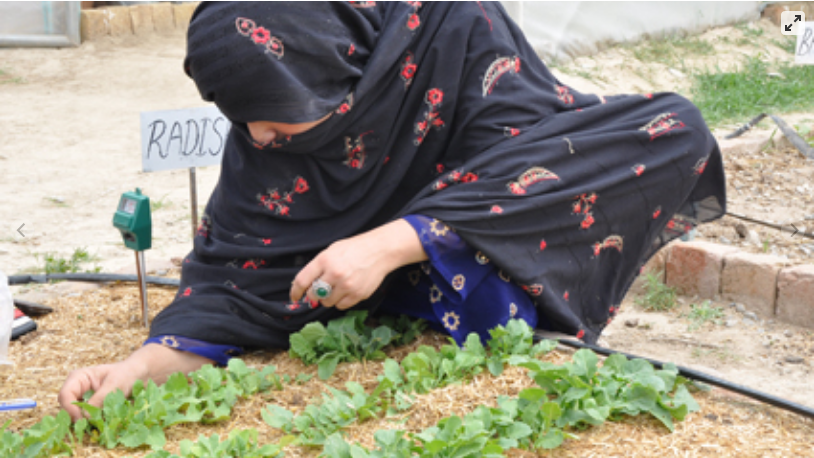
Part of the project is the kitchen gardening initiative which empowers local women by teaching them how to harvest crops to feed their families. With this vital knowledge, families save more income on groceries and food and women are empowered to take care of their community, family and their own needs. Through this initiative, women are given an opportunity to improve family nutrition and incomes, even within the gendered constrictions within Balochistani society.
More than 500 women in three different districts were taught by other local women studying agriculture how to maintain kitchen gardens and how to preserve and process the fruits of their labour. The participants are both women from low income to no income families and the teachers are locally trained professionals from public universities. |
| Urban Co-Governance |
Moderate |
| Enabling State |
Weak |
| Pooling |
Moderate |
| Experimentalism |
Weak |
| Tech Justice |
Weak |
| Project Website |
http://participedia.net/en/cases/balochistan-agriculture-project-kitchen-gardening |
| References, sources, contact person(s) |
website |
Balochistan

by Chiara De Angelis | Jun 8, 2018
Image from http://scannewsnigeria.com/photo-news/at-a-town-hall-meeting-in-abuja/[/caption]
| Country |
Nigeria |
| City |
Abuja |
| Name |
Abuja Town Hall Meetings |
| Date |
2005 |
| Description |
In Abuja, Nigeria, a new democratic space was created to facilitate dialogue between political leaders in local government and citizens. Through the use of public meetings (town hall meetings) and a range of media, decision-making processes became more transparent and the scope for trust and mutual respect improved between citizens and the local government.
THMs were regular quarterly forums where all residents of Abuja could meet with the Minister and his team and raise matters of interest in a ‘no holds barred’ encounter. The THM was broadcast on radio and via a 30 minute television documentary afterwards. Over 1000 people attended the third THM, held in a suburb of the City Bwari. Many people in the community were formally invited to this event, some heard through word of mouth and others through advertisements on the radio. The participation of all six suburbs of Abuja was coordinated through the Area Council Chairpersons who helped organise the events and encouraged different categories of people to participate.
In addition to this, other communication initiatives were subsequently set up to strengthen the process and give feedback on the outcomes from the town hall meetings.
Dateline Abuja – an interactive phone-in and text-in radio programme run every fortnight on a Saturday morning on prime time national radio. A Helpline system – a series of public complaint phone numbers to process public complaints and provide feedback to the source. A team of energetic and passionate young people coordinated the helpline system. Some of them were fresh from University either on the mandatory one year of national service or fresh from service. A fact sheet of what worked well or otherwise according to feedback was circulated and taken as an integral part of memoranda to FCT executive committee. The FCT Executive Committee is the highest body responsible for policy decisions. Abuja Journal publication – an easy to read bi-monthly magazine for citizens with information about spending and policies and human interest stories. Intergenerational dialogues – with a focus on giving voice to children of primary and secondary school age. Boys and girls meet with the Minister of FCT and engage on policy matters in an informal interactive atmosphere. |
| Urban Co-Governance |
Moderate |
| Enabling State |
Moderate |
| Pooling |
Moderate |
| Experimentalism |
Moderate |
| Tech Justice |
Weak |
| Project Website |
http://participedia.net/en/cases/abuja-town-hall-meetings
http://participedia.net/sites/default/files/case-files/237_303_Case_Study_Nigeria.pdf |
| References, sources, contact, person(s) |
Participedia
For Abuja Municipal Council : mail@amacng.com |
Abuja

by Chiara De Angelis | Jun 8, 2018
 Credits: picture by http://www.smartaarhus.eu
| Country |
Denmark |
| City |
Aarhus |
| Name |
Smart City Aarhus |
| Date |
2010; officially launched in 2012 |
| Description of the project |
Smart Aarhus proposes a new way of organizing efforts to find effective and sustainable solutions to the challenges faced by many cities today. Through collaboration between the public and the private sector, citizens, the business community, and knowledge institutions, Smart Aarhus offers a platform for everyone, who wants to make use the opportunities of digitization across sectors and hierarchies.
Smart Aarhus addresses both technical and social problems. The city of Aarhus is integrating and synchronizing its systems for water, transportation, energy, healthcare, waste removal/recycling, and so on while simultaneously working on ways to improve the quality of life of its inhabitants. Second, Smart Aarhus has been designed according to a collaborative organizational model. Cities can only become smarter by fostering greater collaboration among policymakers, companies, entrepreneurs, and citizens. Smart Aarhus was established as a “collaborative community” within the Danish frame for smart cities as set by the Danish Ministry for Housing, Urban and Rural Affairs.
As far as governance is concerned, the initiative is overseen by a steering committee, including representatives from the local business community, research institutions, and the municipality. The Smart Aarhus secretariat works in close partnership with the municipality, Alexandra Institute, Aarhus University, and the Central Denmark Region as well as many different working groups, consisting of volunteers who work on challenges related to traffic, health, energy, culture, sustainability, and other areas. |
| Urban Co-Governance |
Moderate |
| Enabling State |
Strong |
| Pooling |
Strong |
| Experimentalism |
Strong |
| Tech Justice |
Weak |
| Project Website |
http://www.smartaarhus.eu/ |
| References, sources, contact person(s) |
Source: Snow, Hakonsson & Obel (2016) A smart city is a collaborative community: lessons from smart Aarhus, in California Management Review, 92-108
Interview
Contact :
Line Gerstran. Smart City Coordinator, Business and Sustainable Development, The City of Aarhus,
|
Aarhus
