
by Chiara De Angelis | Jun 8, 2018
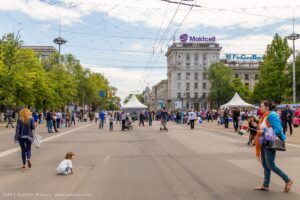 Credits: 2015 (C) Dumitru Brinzan - www.brinzan.com
| Country |
Moldova |
| City |
Chișinău |
| Name |
Public Space Days |
| Date |
The event in itself took place in 2016. |
| Description |
Public Spaces Days is an event organised by the Oberliht Association.
The Public Space Days provide a framework and space for discussion and action on public space. The event aims to highlight the importance of public spaces in our societies and to advocate for open, democratic and inclusive public spaces in our cities. Oberliht Association firmly believes that inclusive and open public spaces are crucial for building and fostering a democratic city in particular, and an inclusive and equal society in general. Moreover the Association recognizes that the public, open and democratic character of public spaces in our cities is currently under threat. The Public Space Days brings together activists, policy makers, artists, active citizens, scholars, architects and the general public in order to raise awareness on topics concerning protection, democratisation and opening of public spaces, to share insights and reflections on the transformations of public spaces, to share practices, ways of organising and collective action that foster and reproduce democratic public spaces. All events during Public Space Days are open and free for everyone to attend. The second edition of Public Space Days took place on September 2016. The edition of 2015 [realized with the support of ECF’s Connected Action for the Commons], did focus on the right to culture and the right to the city. |
| Urban Co-Governance |
Moderate |
| Enabling State |
Weak |
| Pooling |
Moderate |
| Experimentalism |
Moderate |
| Tech Justice |
N/A |
| Website |
APEL: Zilele Spațiului Public 2016 / ЗАЯВКА ДЛЯ УЧАСТИЯ: Дни Публичного Пространства 2016 | Zilele Spațiilor Culturale Alternative / 3-5 iunie 2022 (wordpress.com) |
| References, sources, contact person(s) |
Contact : info@oberliht.org
http://politicalcritique.org/connected-action/2016/pages-from-the-struggle-for-urban-commons-in-chisinau/
ECF Connected Action for the Commons’ Articles; http://www.culturalfoundation.eu/events/public-space-days-2016-in-chisinau-moldova |
chisinau

by Chiara De Angelis | Jun 8, 2018
Credits: Picture by https://commonsjosaphat.wordpress.com/commons-josaphat/
| Country |
Belgium |
| City |
Brussels |
| Name |
Commons Josaphat |
| Date |
2015 |
| Description |
Commons Josaphat is an independent citizens platform that reunites neighbors, activists and associations. What links all these actors is the idea that the city can be governed like a common good.
They are mobilized to transform the Josaphat site (24 hectares) in a common space. In order to do this they have written a proposal to the Brussels Region, the owner of the contested land, where they propose concrete solutions on the organisation of this neighborhood.
The proposition and the organisation is the result of the work of two different working groups and a general assembly where decisions are taken all together.
The first working group, the ’atelier de « modélisation »” has designed a project for part of the site, including among its members representatives from a participatory school, a social housing, a cooperative, and an energy producer among others. The second working group instead, called “atelier usage temporaire”, tried to follow the principles of the Commons in order to temporarily make use of the site.
The proposal that sums up the community’s demands includes ideas on housing, sustainable mobility systems, planning of public spaces, the set up of services and commerces, institutions and infrastructures to promote culture and protect citizens’ health, zero or positive energy solutions, ecological measures to maintain the nature of the land of Josaphat and the constitution of transversal governance and decision-taking models. |
| Urban Co-Governance |
Moderate |
| Enabling State |
Moderate |
| Pooling |
Moderate |
| Experimentalism |
Moderate |
| Tech Justice |
Weak |
| Website |
https://commonsjosaphat.wordpress.com/commons-josaphat/ |
| References, sources, contact person(s) |
http://www.remixthecommons.org/en/2016/09/commons-josaphat-faire-la-ville-de-bruxelles-en-commun/
Contact : ideascommonsjosaphat@gmail.com |
Brussels

by Chiara De Angelis | Jun 8, 2018
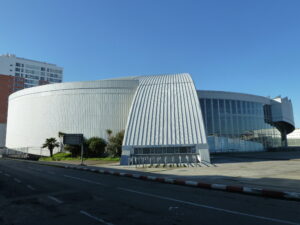 Credits: Picture from Wikimedia Commons
| Country |
Spain |
| City |
A Coruña |
| Name |
Commons District |
| Date |
2014 |
| Description |
A Coruña is a small city in the North of Spain. In the last two years the department committed to participation and democratic innovation did a lot: a big challenge was related to the port (authority property) land, which in Spain is related to tge central covernment. The department started negotiations and public discussions to reclaim the space as public instead of private.
They connected the story of the port with the first real participatory process in the city, set up in order to organize the city into districts. 30 meetings in different neighborhoods were held, working with different methodologies and maps. They mapped the city districts as well as the neighborhoods, and from this understanding of the meaning of the neighborhoods, the figured out that the port had to become one of the city neighborhoods as well.
They are ready to present their proposal of city dostricts. Between them thereì’s also a “common district”, that would include the coastal part of the city, the beaches and also the parks and the hilly part of it. |
| Urban Co-Governance |
Moderate |
| Enabling State |
Moderate |
| Pooling |
Moderate |
| Experimentalism |
Moderate |
| Tech Justice |
N/A |
| Website |
Temas (coruna.gal) |
| References, sources, contact person(s) |
Claudia Delso, Former Councillor of Innovation and Participation, A Coruña, at the Innovative City Development meeting (2-3 March 2017, Madrid) |
A Coruna

by Chiara De Angelis | Jun 8, 2018
 ‘Using a land trust model gives a community a fighting chance to stay where they belong.’
Photograph: Line Algoed. Image from http://cano3punto7.org/
| Country |
Puerto Rico |
| City |
San Juan |
| Name |
Fideicomiso de la Tierra del Caño Martín Peña (Community Land Trust) |
| Date |
2000’s |
| Description of the project |
Fideicomiso de la Tierra, the Community Land Trust created in San Juan by the government, residents and technical professionals, was born to preserve and develop informal communities along the Martín Peña Canal: today, the communities’ population nears 30,000 and it is the most densely populated area in Puerto Rico.
The canal stopped flowing because of pollution, and calls to dredge the canal prompted government action. In the early 2000, both the US Army Corps of Engineers and the government committed to dredge the canal and revitalize the communities. Under the leadership of two employees from the Transportation Authorities, the government organized 700 participatory meetings from 2002-2004, where experts faced the communities’ doubts and concerns and presented some legal tools to preserve affordable housing and formalize landholdings.
At the end of the process, residents opted for a Community Land Trust as the best way to achieve their goal (dredging the canal without displacing them), because of its collective vocation. The CLT has been operating successfully under the Regulations for eight years, and in partnership with ENLACE has made significant progress towards being self-funding and relocating residents humanely and as necessary to dredge the canal. In 2015, it won a Building and Social Housing Foundation World Habitat Award recognizing it as a model for other informal communities.
The CLT is run by an 11-member board of trustees which has a duty to administer the CLT for the community’s benefit. |
| Urban Co-Governance |
Strong |
| Enabling State |
Moderate |
| Pooling |
Strong |
| Experimentalism |
Strong |
| Tech Justice |
Weak |
| Project Website |
http://fideicomisomartinpena.org/ |
| References, sources, contact person(s) |
Interview ;
Other links :
Project Website : http://cano3punto7.org/
Community gathering website : http://g8pr.org/
Other information concerning the CLT : https://world-habitat.org/world-habitat-awards/winners-and-finalists/cano-martin-pena-community-land-trust/#outline
https://labgov.city/theurbanmedialab/the-favela-as-a-community-land-trust-the-case-of-san-juan-puerto-rico/
https://cltweb.org/global-south/cano-martin-pena/
https://www.resilience.org/
Contact : info@fideicomisomartinpena.org |
San Juan
by Chiara De Angelis | Jun 8, 2018
Image source : https://chicagohousingtrust.org/
| Country |
United States |
| City |
Chicago |
| Name |
The Chicago Housing Trust (ex Chicago Community Land Trust) |
| Date |
2006 |
| Description |
The Chicago Housing Trust (formerly known as Chicago Community Land Trust) is a non-profit corporation that was founded in 2006 to address the increasingly limited supply of funding for affordable housing. CHT aims to preserve the long-term affordability of homes created through City programs and maintain a permanent pool of homeownership opportunities for working families. |
| Urban Co-Governance |
Moderate |
| Enabling State |
Strong |
| Pooling |
Moderate |
| Experimentalism |
Moderate |
| Tech Justice |
Weak |
| Website |
https://chicagohousingtrust.org/ |
| References, sources, contact person(s) |
The City of Chicago’s Official site : https://www.chicago.gov/city/en/depts/doh/provdrs/homebuyers/svcs/chicago-community-land-trust-for-buyers.html
Contact : ARO@cityofchicago.org |
chicago
