
by Cosima Malandrino | Jun 8, 2018
Source: Sabinet http://blog.sabinet.co.za/2009/09/wireless-user-groups/
| Country |
South Africa |
| City |
Pretoria |
| Name |
Pretoria Wireless User Group |
| Date |
2007 |
| Description of the project |
Pretoria Wireless Users Group is a South African wireless users group. It is non-profit community organisation providing a Wireless community network in Pretoria, the capital of South Africa.
PTAWUG has been created as the community’s answer to South Africa’s restrictive telecommunications environment. The South African telecommunications industry has been marked by poor service delivery, monopolistic practices and prohibitively high prices.
Founded on 28 July 2007, PTAWUG embodies the African spirit of Ubuntu. Its constitution guarantees openness, free participation and equality to all members of the Wireless User Group. PTAWUG is exclusively funded by donations from the community. Highsite installation and maintenance is conducted by volunteers in their spare time. PTAWUG exemplifies the proverbial open source Bazaar – no management team, no hierarchies, equal participation.
PTAWUG is the 3rd largest wireless network organisation in the world, behind AWMN (Greece), TWMN (Greece). These two networks provide internet as well, which PTAWUG doesn’t, so counting community networks that don’t provide internet – PTAWUG is the largest on earth.
The aim of the network is to provide free TCP/IP communications in and around South Africa’s capital to hobbyists, researchers and other non-commercial users. The network is used for gaming, voip, file transfers and various other IP based services.
PTAWUG connects members from vastly different backgrounds and social standings and provides a sandbox for technology experimentation and community skills development. |
| Urban Co-Governance |
Moderate |
| Enabling State |
Weak |
| Pooling |
Moderate |
| Experimentalism |
Moderate |
| Tech Justice |
Strong |
| Project Website |
https://www.revolvy.com/main/index.php?s=Pretoria%20Wireless%20Users%20Group
http://pta.wug.network/ |
| References, sources, contact person(s) |
Pretoria Wireless User Group, South Africa. Sources: Websites
Contact : bloax@ptawug.za.net ; jasweb@ptawug.za.net
|
Pretoria, South Africa

by Chiara De Angelis | Jun 8, 2018
| Country |
Ghana |
| City |
Accra |
| Name |
ArchiAfrica |
| Date |
2012 |
| Description of the project |
ArchiAfrika is a design-based ‘community’ based run by architects, artists, musicians, writers, film makers and creative people who through their work, chronicle the ‘African condition.’
Together, we are broadening the discourse on Africa’s built environment to encompass the role of socio-cultural design inspired development. ArchiAfrika’s goal is to promote design strategies developed within the continent which address the challenges of our future and engage the next generation of professionals in this critical dialogue.
Their principal focus is a) to draw attention to the need for preservation and archiving of African architecture; b) to connect AA community members with the wider public by sharing documentation and research; c) to provide an active platform for discussion on all matters creative; d) to be a bridge generations within the creative fields; e) to develop ideas and products, with our partners, on design related subjects; f) to promote the need for design in Africa’s development agendas.
They organized African Perspectives is a series of conferences on Urbanism and Architecture in Africa. and the have created the ArchiAfrika Educational Network with a conference attended by 12 African schools of architecture in Accra in June 2012. The network aims to develop a collaborative programme between design, architecture and planning schools on the continent, nurturing talents and creating a platform to engage the talented next generation creative professionals in Africa and the African Diaspora.
Also, the organization is the organizer of the Adventurers in the Diaspora (AiD) a monthly forum, which highlights the achievements of creative people and their role in the development agenda of Ghana |
| Urban Co-Governance |
Moderate |
| Enabling State |
Moderate |
| Pooling |
Strong |
| Experimentalism |
Moderate |
| Tech Justice |
Moderate |
| Project Website |
http://archiafrika.org/ |
| References, sources, contact person(s) |
Wwebsite : http://archiafrika.org/
Contact : info@archiafrika.com ; aa@archiafrika.com |
accra

by Cosima Malandrino | Jun 8, 2018
 Image source: Screenshot Youtube, https://www.youtube.com/watch?v=Bv5MYXRN8go
| Country |
Brazil |
| City |
Porto Alegre |
| Name |
Agenda Colaborativa |
| Date |
2012 |
| Description of the project |
” Curtindo Porto Alegre ” is a collaborative agenda in which anyone can publish and publicize events of public interest in the city. The goal is to create a great network of cultural, sports, tourist and educational agendas of the city, bringing together in one place the main events. The page is divided into different themes, like Arts, Cinema, Community, Education, Sports, Fairs, Gastronomy, Environment, Music, Night, Theater, Technology, Tourism.
Plural, democratic and open, Curtindo Porto Alegre is a collective space so that everyone can access information about the city’s events quickly and easily. The initiative of the city council intends to stimulate the participation of the citizenship in the events that happen in the Capital, besides valuing the rich cultural agenda of the city.
To register for an event you only need to be logged in to a Facebook account and provide basic information like date, time, price and location, as well as a short description. |
| Urban Co-Governance |
Moderate |
| Enabling State |
Moderate |
| Pooling |
Moderate |
| Experimentalism |
Weak |
| Tech Justice |
Moderate |
| Project Website |
http://www2.portoalegre.rs.gov.br/portal_pmpa_novo/default.php?p_noticia=153255&CURTINDO |
| References, sources, contact person(s) |
https://catracalivre.com.br/porto-alegre/cidadania/indicacao/agenda-colaborativa-reune-programacao-cultural-de-porto-alegre/
https://www.youtube.com/watch?v=Bv5MYXRN8go
Contact : contato@curtindopoa.com.br |
Porto Alegre

by Cosima Malandrino | Jun 8, 2018
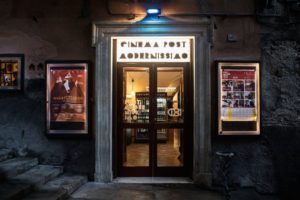 Source: Internazionale,https://www.internazionale.it/reportage/
angelo-mastrandrea/2017/04/09/postmodernissimo-cinema-perugia
| Country |
Italy |
| City |
Perugia |
| Name |
Cinema Postmodernissimo |
| Date |
2014 |
| Description |
Postmodernissimo is a project born in 2014 to bring back to life an abandoned cinema building. More than a normal cinema, PostModernissimo has aimed to create a community cinema, where different forms of art are showcased and presented to the local community. The spectator is put at the center of this new initiative, thanks to different movie screenings in the three theaters available:
The Sala Donati can hosts 159 spectators; Sala Visconti 54 and the third sala, just like in a newspaper, gives space to research, retrospectives and in depth analysis which are hardly ever offered in the city of Perugia. The movie theater also offers an exhibition area and a bar-bistrot to encourage socialization among the spectators and community-building.
PostModernissimo came to life thanks to the generous donations of thousands of citizens who financed the reconstruction through a crowdfunding initiative. On top of that, the organizers also received funds from the European Union and a loan.
The cinema today represents an example of urban regeneration planned by the citizens, with the citizens in mind. |
| Urban Co-Governance |
Weak |
| Enabling State |
Weak |
| Pooling |
Moderate |
| Experimentalism |
Moderate |
| Tech Justice |
N/A |
| Website |
http://www.postmodernissimo.com/ |
| References, sources, contact person(s) |
Cinema Postmodernissimo, Perugia Italy. Sources: Website; Internazionale https://www.internazionale.it/reportage/angelo-mastrandrea/2017/04/09/postmodernissimo-cinema-perugia |
Perugia, Italy
by Chiara De Angelis | Jun 8, 2018

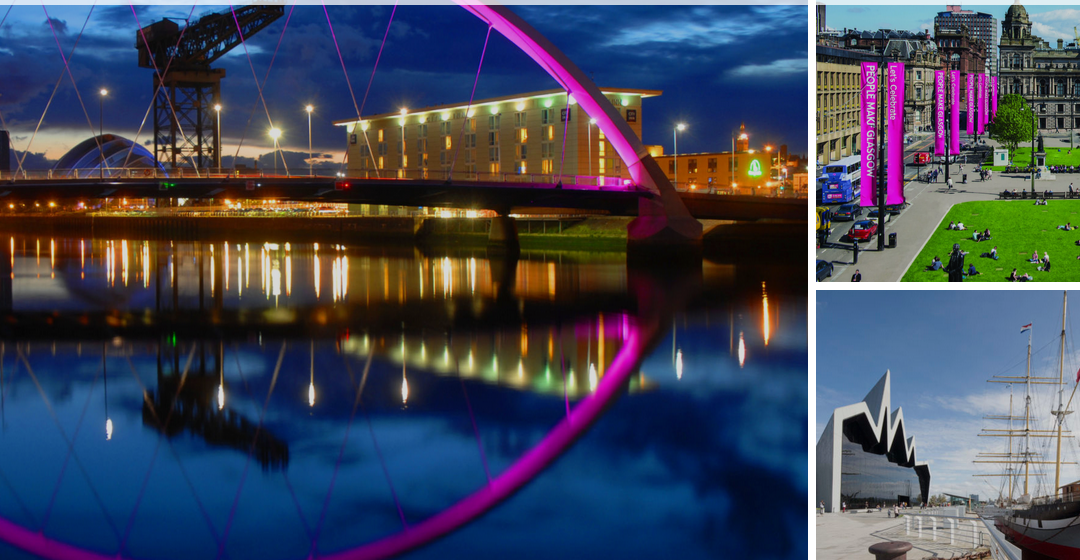
Credit Image : screenshot 2022-22-04 from https://www.glasgow.gov.uk/CHttpHandler.ashx?id=52184&p=0
| Country |
United Kingdom |
| City |
Glasgow |
| Name |
Co-operative Glasgow |
| Date |
2012 |
| Description |
Glasgow had experience working in a cooperative way, so rather than simply delivering services it worked with enterprises and communities to co-create services designed around citizens’ needs. In 2012, the city made a commitment to become a ‘cooperative city’.
The projects is run by the Cooperative Development Unit (CDU) from the Glasgow City Council, set up to deliver the project’s action plan, identified two primary objectives: develop a new culture of partnership within the council, and help the city’s cooperative sector thrive and grow through easier access to funding and networking. The proposal led to the council establishing a £500,000 annual budget, and the expansion of the CDU. It also established a cross-functional group of ‘cooperative champions’, who identify cooperative opportunities and develop links within and beyond the council.
The council’s investment also enabled the Cooperative Glasgow Business Development Fund to be set up. This gives transformational business development grants to cooperatives, mutuals, social enterprises, and council departments. Since 2013, grants totalling £696,881 have been awarded to 34 existing cooperatives and 11 startups.
As with any project of this scale, Cooperative Glasgow has had its challenges. Establishing new kinds of partnerships with external organisations tested existing legal procedures and financially the public sector is naturally risk averse, which can inhibit the implementation of new ideas. It also recognised traditional business support didn’t include promotion of the cooperative business model: this was addressed by running workshops. The council intends to give Cooperative Glasgow the time it needs – and to future proof the project against elections and funding issues. |
| Urban Co-Governance |
Strong |
| Enabling State |
Strong |
| Pooling |
Moderate |
| Experimentalism |
Strong |
| Tech Justice |
Moderate |
| Website |
https://www.glasgow.gov.uk/index.aspx?articleid=17592 |
| References, sources, contact person(s) |
Institutional website of the City Council of Glasgow and online articles. Eurocities report at : http://www.eurocities.eu/eurocities/news/Cities-in-action-Glasgow-adopts-cooperative-model-WSPO-ALUFMU
Contact : Co-operativeBusinessDevelopmentFund@glasgow.gov.uk |
glasgow
