
by Chiara De Angelis | Jun 8, 2018
 Image Credit: http://ccmatienzo.com.ar/wp/events/jam-de-dibujo-28/
Logo source: https://www.facebook.com/clubculturalmatienzo
Image Credit: http://ccmatienzo.com.ar/wp/events/jam-de-dibujo-28/
Logo source: https://www.facebook.com/clubculturalmatienzo
| Country |
Argentina |
| City |
Buenos Aires |
| Name |
Matienzo Club Cultural |
| Date |
2008 |
| Description of the project |
The Club Cultural Matienzo is a civic non profit association created by 5 argentinian citizens and now involving more than 80, which promotes, features, and hosts cultural, artistic and communal projects.
At the intersection between cooperative and a network of organizations, Matienzo is a place for the development of a communal identity.
Matienzo proposes a wide cultural offer ranging from music shows, film and literature events, contemporary art exhibits, multidisciplinary festivals, a program for the training of artists, a radio station, and other initiatives that take place every day inside and outside of the club.
Matienzo also supports and links other similar projects like Abogados Culturales and the Yo Reciclo project.
Matienzo’s philosophy is based on community building, open governance, and a vision centered on people, able to foster connections among them, ideas and diverse knowledge, as well as collective action and social change. |
| Urban Co-Governance |
Moderate |
| Enabling State |
Weak |
| Pooling |
Strong |
| Experimentalism |
Strong |
| Tech Justice |
– |
| Project Website |
http://ccmatienzo.com.ar/wp/ |
| References, sources, contact person(s) |
Interview, website
Contact : info@ccmatienzo.com.ar |
Buenos Aires

by Chiara De Angelis | Jun 8, 2018
Credits: Picture by http://www.deia.com/2017/01/23/bizkaia/bilbao/
bilbao-pone-en-marcha-as-fabrik-para-consolidar-zorrotzaurre-como
-referente-en-industria-40-
| Country |
Spain |
| City |
Bilbao |
| Name |
AS-Fabrik |
| Date |
2017 |
| Description |
AS-FABRIK aims to shape a collaborative pilot Ecosystem for current or future workers of the KIBS sector (university students, entrepreneurs and professionals) so they can acquire the needed skills to attend the future demands of the manufacturing industry sector related with their digital transformation process.
As- Fabrik is structured around five pillars:
- New education programs for university students, entrepreneurs and professionals addressing the new challenges of the industry 4.0 and the digital economy.
- Networking actions among the main Stakeholders (local policy makers and policy experts, universities, entrepreneurs, KIBS companies and industrial sector) to ensure a good match between demand and supply, supported by tailored IT tools.
- Definition of new business models that cover the industry demands and specialized start-ups launching support.
- Minimum Viable Product (MVP) test Fab Lab for the market validation of new products/services.
- Physical and virtual Infrastructure to host the above mentioned items
These actions will position Bilbao as a specialized territory in the development of the Digital Economy and its firms as internationally first level suppliers of the manufacturing industry |
| Urban Co-Governance |
Moderate |
| Enabling State |
Moderate |
| Pooling |
Weak |
| Experimentalism |
Weak |
| Tech Justice |
Strong |
| Website |
http://www.uia-initiative.eu/en/uia-cities/bilbao |
| References, sources, contact person(s) |
http://www.uia-initiative.eu/en/uia-cities/bilbao
Contact :
Jordán Guardo Vazquez
Mayoral Advisor
Willem Van Winden
UIA expert
|
Bilbao
by Chiara De Angelis | Jun 8, 2018
 Credits: picture by http://www.barakabits.com/2015/07/chain-effect-encouraging-sustainable-transport-beirut
| Country |
Lebanon |
| City |
Beirut |
| Name |
The Chain Effect |
| Date |
2014 |
| Description |
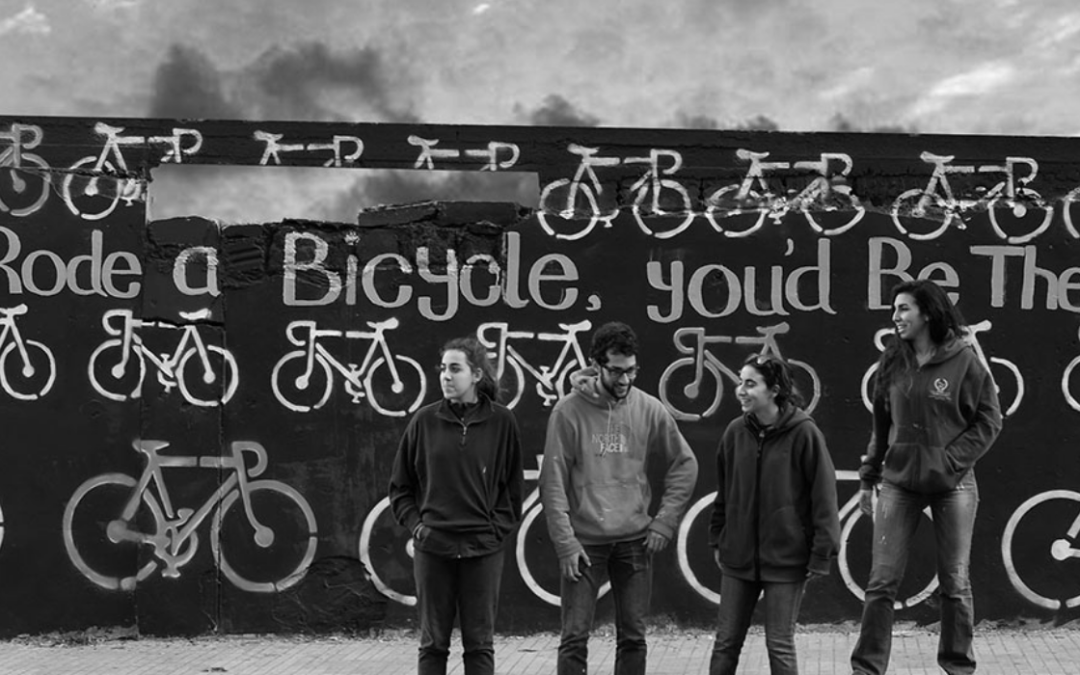
The Chain Effect was created in November 2014, by three friends, to promote cycling for mobility in Beirut. Cycling is not viewed as a means of transport in Beirut, and the city is not the most cycle-friendly. However, congestion, is a major issue bearing high costs on the economy, society and the environment, which could be relieved if more people chose alternative means of transport. The Chain Effect wants to generate discussions and provoke people to think about cycling as more than just a sport or leisure activity. Their mission is to promote the bicycle as a sustainable and convenient form of urban mobility and encourage its use in Beirut. They do this through street art, public installations and community projects. |
| Urban Co-Governance |
Moderate |
| Enabling State |
Weak |
| Pooling |
Moderate |
| Experimentalism |
Moderate |
| Tech Justice |
Weak |
| Project Website |
https://www.facebook.com/TheChainEffect/
https://thechaineffect.me/ |
| References, sources, contact person(s) |
https://www.facebook.com/TheChainEffect/
https://thechaineffect.me/
info@thechaineffect.me |
beirut

by Chiara De Angelis | Jun 8, 2018
Credits: Picture of Barangay by www.megacitizens.com
| Country |
Philippines |
| City |
Barangay |
| Name |
Bantay Sangkay: Community Driven Development (CDD) Approach |
| Date |
NA |
| Description |
The project Bantay Sangkay sought to embed social accountability mechanisms , adoption of Community – Driven Development (CDD) approach in local planning and public expenditure management cycle and to enhance participatory processes and gains of Kalahi Cidds (KC) , a Philippine government Anti-Poverty Program. This program aimed to create an involved citizenship into their own development and welfare and this belies the real meaning of a democratic government and sustainable development. In that sense, the objectives of the Bantay Sangkay project were:
1. Continuity of participatory processes and approaches and consolidate the gains into community decision-making; Its major aim was to reach out and involved the marginalized sectors of the community eg. women, out of school youth, farmers and the conflict affected.
2. Adoption of CDD technology into the local governement’s (LGU) local planning and budgeting or the public expenditure management cycle; Development of a Comprehensive Municipal Development Plan based on the consolidated 24 Barangay Development Plans developed thru the Barangay Development Council.
3. Systematize the use of social accountability mechanisms, tools and activities initially developed through the KC towards the setting up of a social accountability system in the LGU (municipal and barangay levels).
4. Utilize a dynamic combination of Top-Down / Bottom-UP Participatory Development Planning Process. The Participatory Situational Analysis (PSA)conducted by the LGU and the community itself and the Community Based Monitoring System (CBMS) were the starting points in community immersion. |
| Urban Co-Governance |
Moderate |
| Enabling State |
Moderate |
| Pooling |
Moderate |
| Experimentalism |
Strong |
| Tech Justice |
Weak |
| Website |
http://participedia.net/en/cases/bantay-sangkay-community-driven-development-cdd-approach |
| References, sources, contact person(s) |
Participedia.net |
barangay
by Cosima Malandrino | Jun 8, 2018
 Source: Rosario City Government https://www.rosario.gov.ar/web/ciudad/economia-solidaria/agricultura-urbana
| Country |
Argentina |
| City |
Rosario |
| Name |
Programa de Agricultura Urbana |
| Date |
2002 |
| Description |
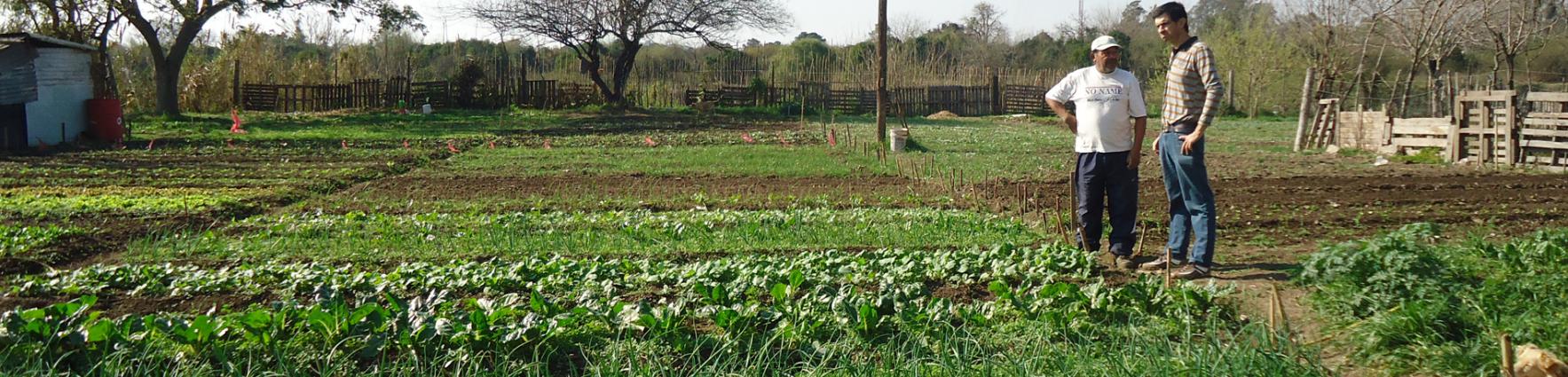
Beginning in 2002, the Programa de Agricultura Urbana institutionalized, built upon and expanded some already existing initiatives of urban agriculture on unused plots of land. The policy planned to support families and community members in situation of increasing poverty through the allocation of land to be used for urban farming. The municipality organized the plan in six districts, appointing a technical coordinator and two local support staff in each of them with knowledge of agriculture or gardening in order to assisting the huerteros (the persons tending the huertas). The residents involved have created more than 700 community farms. The food produced is either consumed by the farmers or sold at the farmers markets every week.
This policy helped foster a community spirit and contributed to the socio-economic upheaval of many families in Rosario that were suffering after the 2001 crisis. |
| Urban Co-Governance |
Weak |
| Enabling State |
Moderate |
| Pooling |
Moderate |
| Experimentalism |
Moderate |
| Tech Justice |
Weak |
| Project Website |
https://www.rosario.gov.ar/web/ciudad/economia-solidaria/agricultura-urbana |
| References, sources, contact person(s) |
Programa de Agricoltura Urbana, Rosario Argentina. Sources: website; UCLG https://www.uclg-cisdp.org/sites/default/files/Rosario_2010_en_final.pdf
https://institucional.us.es/revistas/habitat/7/hys%20n07a05.pdf |
Rosario
